Auto Attendant Article
Area Code Overlay: What It Means for Your Business Number
An area code overlay keeps your number but requires 10-digit dialing. What changes, a phone-system checklist, and current Canadian and US overlays.
Summary
- 01An overlay adds another area code to the same geographic area. Existing business numbers keep their area code, while new numbers may receive the new code.
- 02Local calls stay local, call prices do not change because of the overlay, and customers must include the area code when dialing.
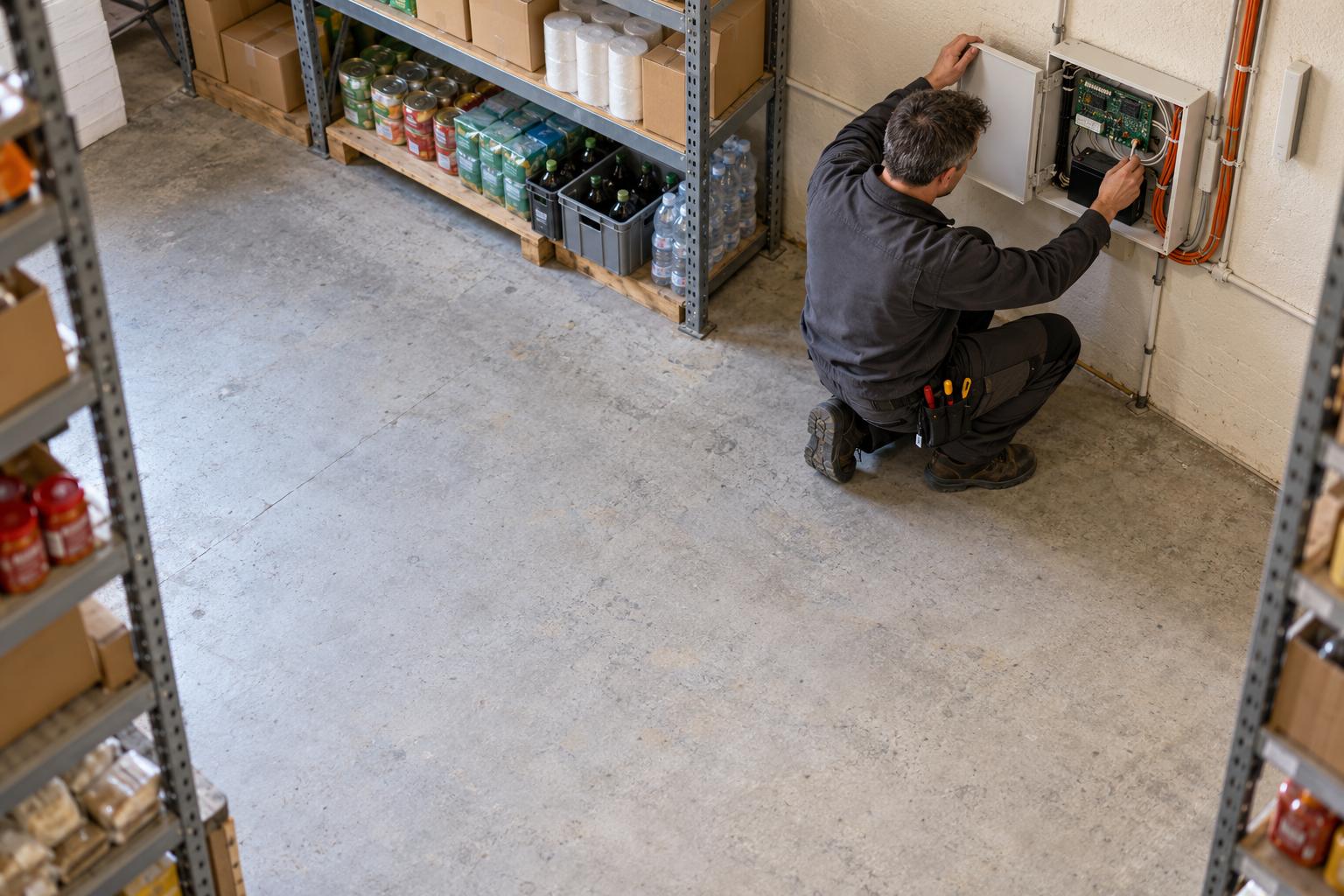
- 03Check PBX settings, saved contacts, call forwarding, alarm panels and other automatic dialers. Finish reprogramming and test every device before the mandatory dialing date.
- 04Show the full number on signs, printed materials, online listings, email signatures and recorded greetings. A seven-digit number becomes incomplete when ten-digit dialing is required.
- 05Where ten-digit dialing is already mandatory, another overlay does not change dialing. The main change is which area code new lines and numbers receive.
Inside this article
- 01What an area code overlay is, in one paragraph
- 02Overlay, split or boundary change: the three ways a new code arrives
- 03What changes for your business, and what does not
- 04The 10-digit dialing rule and why it exists
- 05Phone-system checklist before the overlay date
- 06Signage, print and online listings
- 07Should you get a number in the new area code?
- 08Canadian overlays happening now (as of October 2026)
- 09A simple timeline for the office manager
- 10FAQ
- 11Sources
What an area code overlay is, in one paragraph
An area code overlay adds a second (or third, or sixth) area code to the same geographic area as an existing one. California's utility regulator describes it plainly: multiple area codes co-exist in the same region, people with existing numbers "will retain their current telephone number(s) and area code," and new numbers may be issued in the new code [1]. The price of that convenience is that everyone in the area dials ten digits for local calls.
If you run a business in an area that has just been told "a new area code is coming," the short version is: your number does not change, your customers can still reach you, and you have a small list of equipment, settings and printed material to check. This guide walks through that list, explains the rule behind it, and shows which overlays are scheduled in Canada and the US as of October 2026.
This is general information, not legal or engineering advice for your specific setup.
Overlay, split or boundary change: the three ways a new code arrives
US federal rules name three ways to introduce a new area code [2]:
| Method | What happens | Does any existing number change? | Dialing |
|---|---|---|---|
| Geographic split | The area is divided; one part keeps the old code, the other gets a new one | Yes, for everyone in the part that gets the new code | Seven-digit local dialing can survive inside each code |
| Boundary realignment | The border between two adjacent codes shifts so spare prefixes can be reused | Possibly, near the border | Usually unchanged |
| All-services overlay | A new code serves the same area as the existing code(s) | No | Ten digits for every local call |
State commissions decide which method is used in their state, along with boundaries and dates [2]. In Canada the choice is now settled: the CRTC noted in October 2025 that "the only relief measure now considered in Canada is the distributed overlay method," which "does not require customers to change their telephone numbers" [3]. The Canadian Numbering Administrator's FAQ says the same in its own words: with an overlay, "mandatory customer number changes within the affected overlay relief area are eliminated" [4].
So when you hear "new area code" today, in either country, it almost always means an overlay.
What changes for your business, and what does not
| Question | Answer | Source |
|---|---|---|
| Does my phone number change? | No. Your number, including the area code, stays the same | FCC |
| Can customers still call me the same way? | Yes, but they must dial all ten digits, even from the same area code | FCC |
| Do local calls become long distance? | No. "Calls that were local before the area code change will remain local calls" | CPUC Q21 |
| Does the price of a call change? | No, according to the California regulator; AT&T says new codes won't affect the price of calls on its network | CPUC Q20, AT&T |
| Does 911 change? | No, you still dial three digits | CPUC Q14 |
| Will a new line or new number get the new code? | Most likely, once the old code's prefixes run out | CPUC |
| Who pays to update equipment and advertising? | The customer. "Individual consumers are responsible for these costs" | CPUC Q19 |
The practical work, then, is entirely on your side of the line: anything that dials out with seven digits, and anything that shows your number without its area code.
- Your existing number, including its area code, stays the same.
- Calls that were local remain local calls.
- The cost of a call does not change because of the overlay.
- Customers must dial the full number, even within the same area code.
- Equipment and services that call stored seven-digit numbers need updating.
- Printed and online numbers need to include the area code.
The 10-digit dialing rule and why it exists
The US rule is short. No area code overlay may be implemented "unless there exists, at the time of implementation, mandatory ten-digit dialing for every telephone call within and between all area codes in the geographic area covered by the overlay area code" [2]. The reason is fairness: if old-code customers could keep dialing seven digits while new-code customers could not, the newer numbers would be at a disadvantage.
Two details matter for planning:
- Some areas need 1 + ten digits. The FCC notes that in California, some parts of Michigan and Illinois area code 708, you may have to dial "1" before the area code for local calls [5]. The California regulator's overlay FAQ describes the local dialing pattern as 1 + area code + number [1].
- There is often a grace period. CNAC defines a "permissive dialling period" as the window, starting with the new code, when both old and new dialing work; it ends on the mandatory dialing date [4]. Plan to finish your changes before that period ends, not after calls start failing.
Many areas already dial ten digits. As part of the 988 crisis-line rollout, more than 80 US area codes had to move to 10-digit dialing by July 16, 2022 [5], and in Alberta mandatory ten-digit local dialling became universal when 587 arrived in September 2008 [6]. If your area already dials ten digits, a new overlay changes nothing about dialing; you only need to think about new numbers.
If you have been printing seven-digit numbers to look "local," an overlay is the moment to stop. With ten-digit dialing in force, a seven-digit number on a sign is an incomplete number.
Phone-system checklist before the overlay date
The FCC's advice to businesses is one line: if your company uses a PBX or VoIP phone system, "you may need to update or reprogram it for 10-digit dialing" [5]. The California regulator's business checklist is more specific: notify alarm service providers, reprogram call-forwarding, automatic-dial and speed-dial features, and update printed and online material [1]. AT&T adds that "automatic calling equipment, other devices, and services that call stored 7-digit numbers need to be updated" [7].
Turned into a working checklist:
| # | Item | What to check | Who usually does it |
|---|---|---|---|
| 1 | Desk phones and PBX dial plan | Local calls are not stripped to seven digits; an outside-line prefix plus ten digits works | Your phone provider or installer |
| 2 | Speed dials and stored contacts | Every saved number has its area code, on desk phones, mobiles and softphone apps | Each staff member |
| 3 | Call forwarding | Forward-to numbers on desk lines and mobiles are stored as ten digits | Whoever set up forwarding |
| 4 | Phone menu and ring targets | Any number your auto attendant or hunt group rings is entered in full; a greeting that reads out a number says the area code | Whoever manages the menu |
| 5 | Alarm and security panels | The monitoring centre number the panel dials is ten digits; ask the alarm company to confirm | Alarm vendor |
| 6 | Dial-up devices | Any modem, older card terminal or device that dials out | Device vendor |
| 7 | Automatic diallers and reminder systems | Appointment-reminder tools and CRMs store and dial ten digits | Software vendor or admin |
| 8 | Test calls | Call a same-area number with ten digits from each phone and device after the change | Office manager |
On item 4: most hosted menus already require a full number for each phone they ring, often in the international +1 format, so they are rarely the problem. The risk is older equipment on the premises and anything someone programmed years ago.
Keep a note of which items you checked and when. If something fails on the mandatory date, that list shortens the search.
Signage, print and online listings
The California regulator is direct about who handles advertising: "Each customer is responsible for telephone numbers appearing in any display advertising" [1]. Its overlay checklist for businesses lists stationery, checks, business cards, advertisements, promotional items, brochures, web pages and catalogs [1].
A quick audit:
- Website: header, footer, contact page, and any
tel:links. Atel:link should carry the full number (for exampletel:+15145550123). - Online listings: your Google Business Profile, map listings, review sites, industry directories.
- Printed material: business cards, letterhead, invoices, quotes, menus, vehicle lettering, window decals, yard signs.
- Email signatures for every staff member.
- Recorded greetings that read out a number ("call us back at 555-0123") need the area code added.
If you have been printing seven-digit numbers to look "local," an overlay is the moment to stop. With ten-digit dialing in force, a seven-digit number on a sign is an incomplete number.
Should you get a number in the new area code?
Existing numbers keep their code. New service in an overlay area will "most likely receive the new area code" [1], so a business opening a second line or a new location may end up with the newer code whether it wants it or not.
How to think about it:
| Situation | Practical choice |
|---|---|
| You already have a number customers know | Keep it. An overlay never forces a change, and moving providers within the same area normally lets you keep the number through local number portability [1] |
| You need a new number and the old code is still available | Take it if you like, but don't pay extra for it; calls cost the same either way [1] |
| Only new-code numbers are offered | Accept it. Within the overlay area it is just as local |
| You want one number for several cities | Consider a toll-free number instead of chasing a particular area code |
For more on how much an area code matters to callers, see our guide to choosing a business phone number area code.
Canadian overlays happening now (as of October 2026)
Canada adds codes by distributed overlay, and several are scheduled. Dates below are from CRTC decisions and the Canadian Numbering Administrator.
| Region | New code | Existing codes | Relief (in-service) date | Source |
|---|---|---|---|---|
| Eastern Quebec (incl. Québec City, Chicoutimi, Alma) | 273 | 367 / 418 / 581 | 27 February 2027 | CRTC 2025-269; CNA PL-632 |
| Nova Scotia and Prince Edward Island | 851 | 782 / 902 | 27 May 2028 | CRTC 2026-190 (29 July 2026) |
| Alberta (province-wide) | 568 | 368 / 403 / 587 / 780 / 825 | 10 June 2028 | CRTC 2026-252 (29 September 2026) |
| Metro Toronto | 942 | 416 / 437 / 647 | In service since 26 April 2025 | CNAC news |
| British Columbia | 257 | 236 / 250 / 604 / 672 / 778 | In service since 24 May 2025 | CNAC news |
Eastern Quebec, in detail. The CRTC approved 273 on 10 October 2025, timing it about nine months before the projected exhaust date of November 2027 [3]. The administrator's planning letter says the overlay covers 258 exchange areas, and that all local calls in the 273/367/418/581 area "must be dialled with 10-digits" [8]. Businesses there already dial ten digits, so the change mostly affects which numbers new lines receive after February 2027.
Alberta shows the long-run pattern. The province has been one overlay complex since 587 was added in September 2008; 825 followed in April 2016 and 368 in April 2022, each covering all of Alberta [6]. The same document notes that "currently 10-digit dialling is mandatory for local calls" there and that local dialling will not change with the next code. One overlay is usually followed by another, years later, with no change to existing numbers.
In the US, relief is decided state by state. AT&T keeps a state list of notices; as of October 2026 it shows, for example, a new code for the 657/714 area of California "expected Mar 2027" [7]. Check your carrier's notice or your state commission for the dates in your area. Our overlay reference page explains how to read the overlay groups in the North American numbering tables.
New code 273 overlays existing codes 367 / 418 / 581, including Québec City, Chicoutimi and Alma.
New code 851 overlays existing codes 782 / 902.
New code 568 overlays existing codes 368 / 403 / 587 / 780 / 825 province-wide.
A simple timeline for the office manager
| When | Do this |
|---|---|
| As soon as the overlay is announced | Run the phone-system checklist above; ask your phone provider and alarm company whether anything on their side changes |
| Before the permissive period ends (or before the relief date, if you already dial ten digits) | Finish reprogramming; place test calls from every device |
| Next print run or website edit | Make sure every printed and online number shows ten digits |
| After the new code goes live | Expect new lines and new numbers to come from the new code; update any internal number lists |
- 01When the overlay is announced
Run the phone-system checklist and ask your phone provider and alarm company whether anything on their side changes.
- 02Before the dialing deadline
Finish reprogramming and test every device before the permissive period ends, or before the relief date if you already dial ten digits.
- 03At the next print run or website edit
Make sure every printed and online phone number shows ten digits.
- 04After the new code goes live
Expect new lines and numbers to come from the new code, and update internal number lists.
FAQ
Will my area code change? No. Under an overlay, "your phone number, including your area code, will not change" [5].
Do local calls cost more after an overlay? No. Local calls stay local, and the California regulator says the cost of a call does not differ because of the change [1].
Does 911 change? No. You still dial three digits [1].
Do I have to dial 1 first? It depends on the area. In most places ten digits are enough; the FCC names California, parts of Michigan and Illinois 708 as places where you may need 1 + ten digits [5]. Your carrier's overlay notice will say.
Will customers think a new-code number is not local? Some may notice an unfamiliar code at first. Within the overlay area the new code reaches the same exchanges at the same price, and after a few years it becomes ordinary, as 587 has in Alberta.
Is an overlay the same as my area being split? No. A split changes the area code for part of the region; an overlay changes no one's number [2]. See the glossary for the other numbering terms.
If you are picking a new number in an overlay area, Auto Attendant's number search covers US and Canadian numbers and ranks them by how easy they are to remember.
Sources
- Area Code Frequently Asked Questions - California Public Utilities Commission; overlay definition, 1 + ten-digit dialing, 911 unchanged, call costs, business preparation checklist, who pays; accessed 2026-10-28.
- Ten-Digit Dialing - Federal Communications Commission consumer guide (archived page, last reviewed 21 July 2022); ten-digit definition, number unchanged, PBX/VoIP reprogramming, 988 transition; accessed 2026-10-28, read via Internet Archive copy.
- 47 CFR 52.19 Area code relief - eCFR; split, realignment and overlay definitions, state commission role, mandatory ten-digit dialing for overlays; accessed 2026-10-28 via the eCFR API.
- Frequently Asked Questions - Canadian Numbering Administrator (CNAC); overlay definition, no mandatory number changes, permissive dialling period; accessed 2026-10-28.
- Telecom Decision CRTC 2025-269, Relief for area code complex 367/418/581 in Quebec - CRTC, 10 October 2025; distributed overlay as the only relief method in Canada, area code 273 effective 27 February 2027; accessed 2026-10-28, read via Internet Archive copy.
- Planning Letter PL-632: NPA 273 to Overlay NPA 367/418/581 (Eastern Québec) - Canadian Numbering Administrator via NANPA, 17 October 2025; 258 exchange areas, 10-digit local dialling; accessed 2026-10-28.
- CNA website home page, Industry News - Canadian Numbering Administrator; CRTC 2026-252 (568, Alberta, relief date 2028-06-10), CRTC 2026-190 (851, NS/PEI, relief date 2028-05-27), 942 and 257 in service in 2025; accessed 2026-10-28.
- NPA 368/403/587/780/825 Proposal for Relief of an Overlay NPA Complex (PROC) - Canadian Numbering Administrator; Alberta overlay history (587 in 2008, 825 in 2016, 368 in 2022), 10-digit dialling; accessed 2026-10-28.
- Learn about area code and 10-digit calling updates - AT&T; keep your number, stored 7-digit numbers must be updated, no price change, state list of upcoming codes; accessed 2026-10-28.
- Telecom Decision CRTC 2026-190 - CRTC, 29 July 2026; area code 851 distributed overlay on 782/902 (Nova Scotia and PEI), effective 27 May 2028; accessed 2026-10-28, read via Internet Archive copy.
- Telecom Decision CRTC 2026-252 - CRTC, 29 September 2026; area code 568 distributed overlay on 368/403/587/780/825 (Alberta), effective 10 June 2028; accessed 2026-10-28, read via Internet Archive copy.
External Sources (8)
Published by
Auto Attendant Editorial
Auto Attendant gives a small business one phone number and a recorded menu that sends each caller to the right person's mobile, for a flat $29 a month per business line, whatever the size of the team.
Editorial note
Researched and written by Auto Attendant Editorial with AI-assisted research tools; sources are cited inline and checked before publication. Report an error: https://autoattendant.io/contact/.