Auto Attendant
Articles (English) - Page 1 / 5
Hold Music Licensing for Business: A Provider Checklist
A 2026 guide to hold music licensing for business: a call-state rights register, supplier questions, US and Canadian licensing starting points and upload limits for nine phone platforms.
Take Payment Over the Phone During a Business Call: 3 Methods
How to take payment over the phone during a business call in 2026: payment link vs virtual terminal vs secure keypad, SAQ criteria, PCI SSC FAQ 1210, published US fees and a handoff checklist.

Two Business Numbers on One Mobile Phone: Greetings, Callbacks
How to run two business numbers on one mobile phone in 2026: compare forwarding, multi-number apps and separate accounts, with a 12-case acceptance sheet for greetings, voicemail, callbacks and texts.
Phone Greeting Audio Format: Record, Convert and Test
A 2026 guide to phone greeting audio formats: compare provider WAV and MP3 requirements, brief a voice artist, adjust volume, and approve the export on a real telephone call.

Dial-by-Name Directory vs. Phone Menu for Small Teams
Compare dial-by-name directories and phone menus in 2026. Use caller-knowledge worksheets, fictional keypad-collision examples, vendor checks, and an editable acceptance test for small teams.

Why New Area Codes Appear: Number Exhaustion in Canada
How Canada forecasts area code exhaustion and picks overlays, with the approved 851 (NS/PEI) and 568 (Alberta) codes and what changes for your number.

Do Not Call Registry and TSR: Small Business Basics
Who must scrub against the National Do Not Call Registry, the B2B exemption, the $85 area-code fee, the 31-day rule, calling hours and $53,088 penalties.

Toll-Free vs Local Business Number: How to Choose
A decision guide for small businesses: who calls you and from where, what each number costs per minute, portability, texting limits and Canada notes.
Phone Toll Fraud: How to Protect a Small Business Line
How toll fraud works (hacked phone systems, voicemail and forwarding abuse, one-ring scams), who pays, and the controls a small business should switch on.
Who Regulates Your Business Phone in the US?
FCC, FTC, state commissions or attorneys general? A plain map of who handles which business phone problem in the US, and how to file a complaint.

Port Request Rejected? 10 Common Reasons and Fixes
Why carriers reject number port requests: name, address, account number, PIN, locks, BTN, unpaid balances. A fix for each, a checklist and who to call.
What Happens to Your Business Number After You Cancel
Cancelled a business line? How number aging works in the US and Canada, how long numbers are held, how to get one back, and how to port before cancelling.
TCPA Basics for Small Business: Consent, Hours, Mistakes
What the TCPA means for a small business that calls or texts customers: consent, 8 a.m. to 9 p.m. hours, Do Not Call, opt-outs and 2026 FCC changes.
Number Porting in Canada: CRTC Rules and Timelines
How phone number porting works in Canada: CRTC decisions, the two-business-day and 2.5-hour intervals on record, exchange limits, and what to prepare.
Who Regulates Business Phones in Canada? CRTC, ISED, CCTS
Who does what for a Canadian business phone: CRTC rules, ISED spectrum, CNA numbering, CCTS complaints, privacy commissioners and the Competition Bureau.

VoIP vs Landline vs Mobile for a Small Business Phone
A plain comparison of VoIP, landline and mobile business phones: power outages, 911, reliability, cost drivers and keeping your number. US and Canada.
STIR/SHAKEN in Canada: What the CRTC Requires
How the CRTC's STIR/SHAKEN rules work in Canada as of October 2026: the decisions, the CST-GA, attestation levels, and what to ask your carrier.
Vanity Phone Numbers: How They Work and When to Get One
How vanity numbers map letters to keypad digits, how toll-free vanity numbers are assigned, the FCC hoarding and brokering rules, and when one pays off.
Virtual Phone Number: How It Works, Costs and Limits
What a virtual phone number is, how calls reach your phones, what drives the cost, and where it falls short on 911, outages and texting. US and Canada.
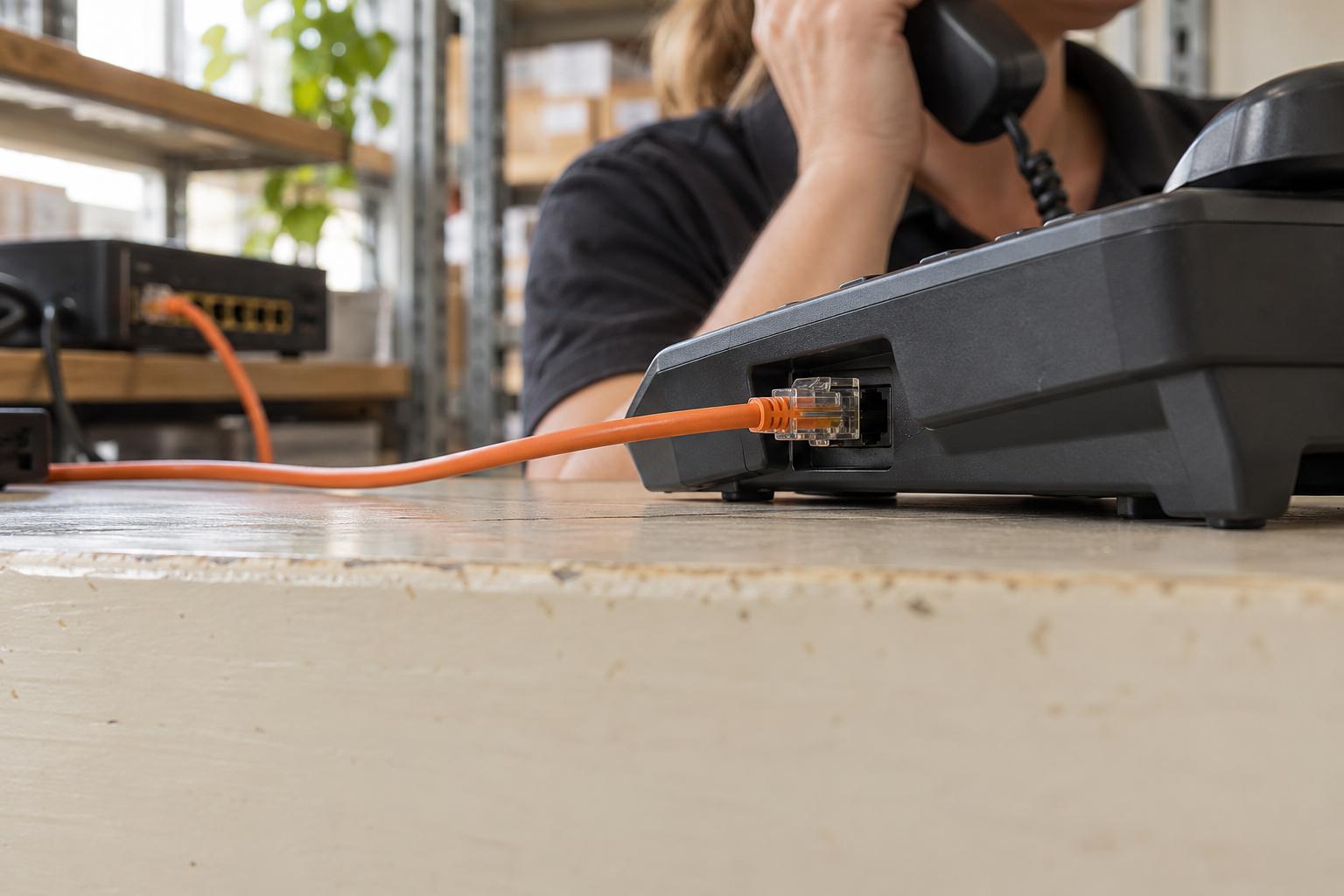
VoIP Bandwidth per Call: Codecs, Jitter and Latency
A G.711 VoIP call uses about 87 kbps each way on Ethernet. How codecs, packet headers, jitter, latency and packet loss decide what your office line needs.
Letter of Authorization (LOA) for a Number Port
What a porting letter of authorization is, who may sign it, what goes in each field, and the mismatches that get an LOA rejected. US and Canada.