Auto Attendant Article
Who Regulates Business Phones in Canada? CRTC, ISED, CCTS
Who does what for a Canadian business phone: CRTC rules, ISED spectrum, CNA numbering, CCTS complaints, privacy commissioners and the Competition Bureau.
Summary
- 01The CRTC sets rules for phone providers, while ISED manages spectrum and equipment certification. The CNA assigns numbering resources to carriers under CRTC oversight.
- 02For unresolved billing or service problems, start with your provider and then the free CCTS complaint service if your business and service qualify.
- 03The CCTS normally requires a monthly telecom bill under $2,500. The Wireless Code also covers small businesses below its average monthly telecom bill threshold.
- 04Privacy complaints go to the OPC or, in Quebec, the CAI. False or misleading advertising and deceptive telemarketing fall within the Competition Bureau's role.
- 05Business numbers are exempt from National Do Not Call List rules, but telemarketing and automatic dialing rules still apply. CASL separately covers commercial electronic messages.
Inside this article
- 01The short answer
- 02The map: who regulates what
- 03The CRTC: the rule-maker for phone companies
- 04ISED: spectrum, equipment and the anti-spam website
- 05CNA and CNAC: who hands out Canadian numbers
- 06CCTS: the free complaint desk
- 07Privacy and advertising: the OPC, the CAI and the Competition Bureau
- 08Which door to knock on
- 09Checklist for a Canadian small business
- 10FAQ
- 11Sources
The short answer
Several bodies share the job, and which one matters depends on the problem:
- The CRTC sets the rules telephone companies must follow: number portability, 9-1-1, the National Do Not Call List, consumer codes such as the Wireless Code, and part of Canada's anti-spam law.
- ISED (Innovation, Science and Economic Development Canada) manages radio spectrum and certifies radio and telecom equipment. It does not hand out phone numbers.
- The Canadian Numbering Administrator (CNA) assigns area codes and exchange codes to carriers under CRTC oversight.
- The CCTS (Commission for Complaints for Telecom-television Services) is the free complaint desk once your provider has failed to fix a problem.
- The Office of the Privacy Commissioner of Canada (and in Quebec, the Commission d'accès à l'information) handles privacy; the Competition Bureau handles false or misleading advertising and deceptive telemarketing.
For a small business, the practical order is almost always: your provider first, the CCTS second, and a regulator only for rule breaches the CCTS does not handle. This guide reflects the rules as of October 2026 and is educational information, not legal advice.
The map: who regulates what
| Body | What it is | What it does for your business phone | Where you go |
|---|---|---|---|
| CRTC | Independent quasi-judicial tribunal | Sets rules for telephone, cell and internet providers: porting, 9-1-1, telemarketing, consumer codes, part of CASL | [1] |
| ISED | Federal department | Spectrum licences, equipment certification, runs the CASL information site and Spam Reporting Centre | [2] |
| CNA / CNAC | Numbering administrator under contract to an industry consortium | Assigns area codes and central office codes to carriers, runs area code relief planning | [3] |
| CCTS | Private, not-for-profit complaints body | Resolves unresolved complaints for individuals and small businesses | [4] |
| OPC | Federal privacy commissioner | PIPEDA complaints about how businesses handle personal information | [5] |
| CAI (Quebec) | Quebec access-to-information and privacy commission | Quebec private-sector privacy law (P-39.1) | [6] |
| Competition Bureau | Independent law enforcement agency | False or misleading advertising, deceptive marketing, part of CASL | [7] |
| Provinces, territories, municipalities | Governments | 9-1-1 call centres and emergency responders | Your local 9-1-1 authority |
- Sets rules for telephone providers, including number portability, emergency calling, telemarketing and consumer codes.
- Individual billing disputes go to the CCTS.
- Manages radio spectrum and certifies radio and telecom equipment.
- Hosts the CASL information site and Spam Reporting Centre; does not itself levy CASL penalties.
The CRTC: the rule-maker for phone companies
The CRTC describes itself as "an independent quasi-judicial tribunal that regulates the Canadian communications sector in the public interest." Its mandate comes from Parliament, administered through the Minister of Canadian Heritage, and its responsibilities include the Telecommunications Act, the Broadcasting Act, the Online News Act and Canada's Anti-Spam Legislation [1]. The Telecommunications Act (S.C. 1993, c. 38) is the statute that gives it power over telephone companies.
The CRTC regulates providers, not their customers. The rules that touch a small business phone most directly are:
Number portability. CRTC decisions are why you can take your number with you. Telecom Decision CRTC 2005-72 (20 December 2005) required wireless carriers to port numbers in and out, set a two-business-day interval for simple ports between wireless and wireline, and set 2.5 business hours for simple wireless-to-wireless ports [8]. Those intervals measure the carrier step for a simple, correct request, not the whole job; our article on how long number porting takes explains the difference.
9-1-1. "The CRTC regulates telephone and cell service companies. These companies create networks that make it possible to connect 9-1-1 calls to call centres." The call centres and emergency responders themselves "fall under the jurisdiction of provincial, territorial, and municipal governments" [9]. So a question about how your provider handles 9-1-1 goes to the CRTC; a question about how a 9-1-1 centre answered goes to your province or municipality. Our emergency calling page covers what this means for hosted numbers.
Telemarketing and the National Do Not Call List (DNCL). The CRTC runs the DNCL rules and the wider Unsolicited Telecommunications Rules. Telemarketers must identify themselves and the purpose of the call, display a number you can call back, and call only between 9:00 a.m. and 9:30 p.m. on weekdays and 10:00 a.m. and 6:00 p.m. on weekends. Calls to business numbers are exempt from the DNCL rules but still covered by the telemarketing and automatic dialing (ADAD) rules. The CRTC can impose penalties of up to $1,500 per violation for an individual and $15,000 for a corporation [10]. The CRTC is reviewing these rules (Compliance and Enforcement Notice of Consultation CRTC 2026-132; replies were due 11 August 2026). A consultation changes nothing until a decision issues, so the current rules apply [11].
Consumer codes. The CRTC has four mandatory consumer protection codes. Of these, the Wireless Code applies to individual and small business customers, defined as a business whose average monthly telecom bill is under $2,500; large corporate accounts are not covered. The Internet Code, TV Service Provider Code and Deposit and Disconnection Code have narrower scopes, and the Deposit and Disconnection Code applies to residential home phone service [12]. In practice that means a business cell plan may have code protections that a business landline or VoIP line does not.
What the CRTC does not do: it does not resolve individual billing disputes. That is the CCTS's job.
ISED: spectrum, equipment and the anti-spam website
ISED's telecom role is about the airwaves and the hardware. Its spectrum site describes the job as providing "access to the radiofrequency spectrum by issuing authorities for its use, minimizing interference" and covers licences, equipment certification, spectrum auctions and compliance and enforcement [2].
For a small business, ISED shows up in two places:
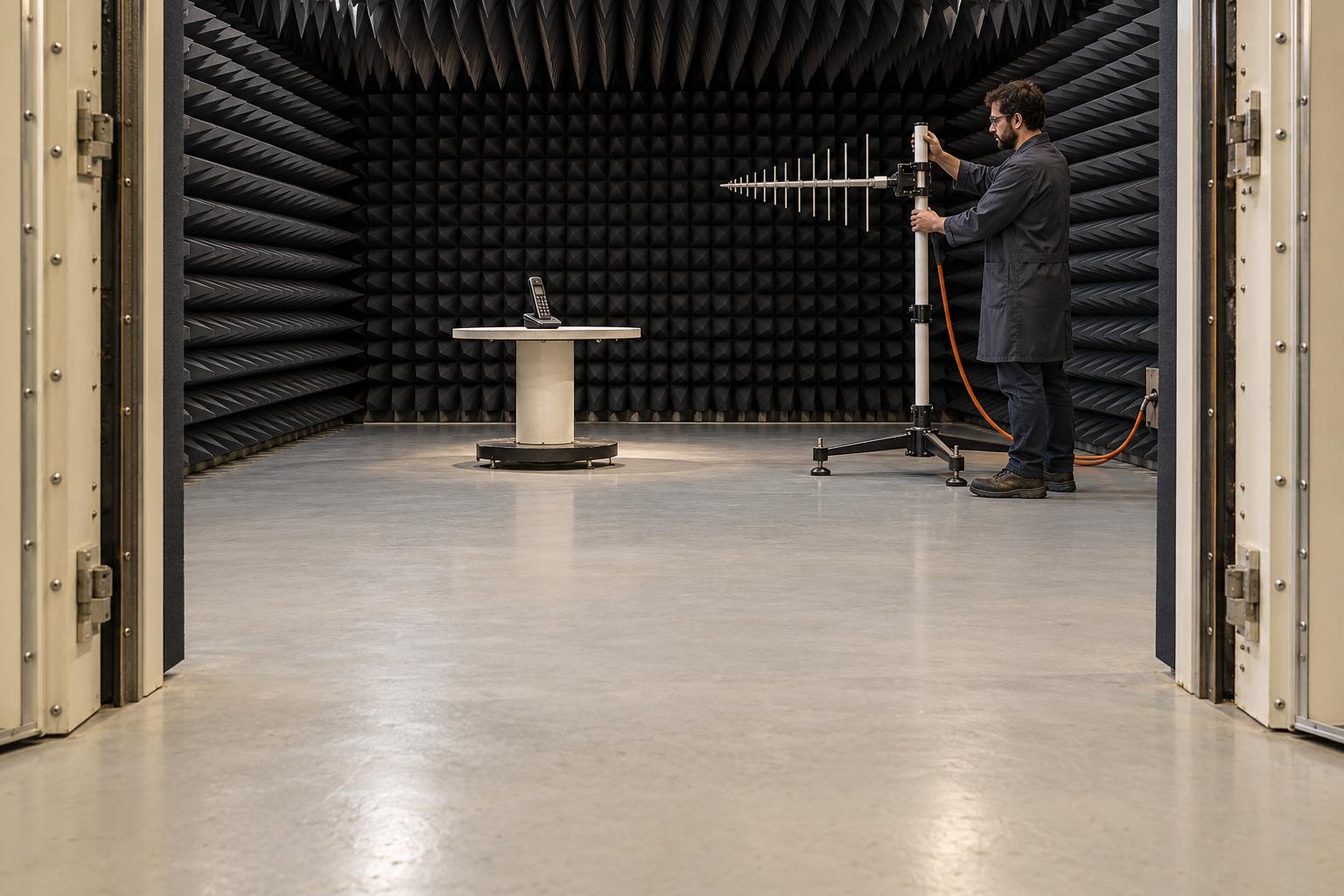
- Equipment. Phones, cordless handsets and radio devices sold in Canada go through ISED's certification processes. If you buy a cheap imported cordless system, it should carry Canadian certification.
- Anti-spam. ISED hosts the CASL information site and the Spam Reporting Centre [13]. It does not itself levy CASL penalties (see below).
ISED is often confused with the CRTC because both work on "telecom". A rough rule: ISED handles spectrum and devices; the CRTC handles services, prices and conduct of the companies selling them.
For a small business, the practical order is almost always: your provider first, the CCTS second, and a regulator only for rule breaches the CCTS does not handle.
CNA and CNAC: who hands out Canadian numbers
Phone numbers in Canada are not issued by ISED or by the CRTC directly. The Canadian Numbering Administrator provides "a numbering administration service to the Canadian telecommunications industry under contract to the Canadian Numbering Administration Consortium Inc. (CNAC)", and the administration of Canadian numbering resources is "under the regulatory oversight" of the CRTC, following CRTC-approved guidelines such as the Canadian Central Office Code Assignment Guideline [3].
Canada shares country code 1 and the North American Numbering Plan with the United States and 18 Caribbean nations. A number is NXX-NXX-XXXX: a three-digit area code (NPA), a three-digit central office code, and a four-digit line number [3]. The CNA also chairs the relief planning committees that plan when a region gets a new overlay area code; the CRTC approves each one. For example, Telecom Decision CRTC 2026-190 (29 July 2026) approved area code 851 as an overlay on 782 and 902 in Nova Scotia and Prince Edward Island, effective 27 May 2028 [14].
What this means for you: you never deal with the CNA. Your provider (or its underlying carrier) holds blocks of numbers and assigns one to you. The CNA's own site lists area codes by province and announces relief plans.
CCTS: the free complaint desk
The CCTS is "a private, not-for-profit corporation incorporated under federal legislation" that receives no taxpayer money; the CRTC requires all telecom providers and most TV providers to participate in it and fund it [4].
A small business can file a complaint about telecom service if all three conditions hold [4]:
- You have tried to resolve the problem directly with your provider and failed.
- Your monthly bill for all telecom services is normally under $2,500.
- The complaint is about unregulated wireless, internet, local phone (including directory listings, operator services or directory assistance), long distance, or a combination.
How it works: if the complaint is within its mandate, the CCTS sends it to the provider and gives the provider 20 calendar days to work with you directly. If that fails, the CCTS reviews the file and decides whether the provider "reasonably performed its obligations" under the contract and the codes. It can require providers to fix billing errors, restore wrongly suspended service, stop collection activity during the process, correct credit bureau reporting, give credits and, in appropriate cases, pay compensation. It cannot make a provider lower its prices or change its policies. The service is free [4].
What the CCTS will not take: complaints about services regulated by the CRTC (tariffed services), privacy complaints (sent to the OPC), false or misleading advertising (Competition Bureau), and unwanted telemarketing (National DNCL) [4].
- 01Try your provider first
Put the complaint in writing and record the date, name and ticket number. The CCTS will ask whether you tried to resolve it.
- 02Check eligibility and file
If the provider has failed to resolve it, file with the CCTS when your monthly telecom bill is normally under $2,500 and your complaint concerns an eligible unregulated service.
- 03Work toward resolution
For an in-scope complaint, the CCTS gives the provider 20 calendar days to work with you. If that fails, the CCTS reviews the file against the contract and codes.
Privacy and advertising: the OPC, the CAI and the Competition Bureau
Privacy. PIPEDA "sets the ground rules for how private-sector organizations collect, use, and disclose personal information in the course of for-profit, commercial activities across Canada," enforced by the Office of the Privacy Commissioner. Alberta, British Columbia and Quebec have their own private-sector privacy laws deemed substantially similar [5]. In Quebec, the Commission d'accès à l'information oversees the private-sector act (P-39.1). Call logs, voicemails and transcripts all contain personal information, which is why our privacy page sets out how they are handled.
Advertising and deceptive marketing. The Competition Bureau is "an independent law enforcement agency" whose remit includes false and misleading advertising and deceptive telemarketing [7]. A provider that advertises "unlimited" and then throttles, or a scam caller pretending to be your carrier, is in its territory.
CASL is split three ways. The CRTC can issue administrative monetary penalties for violations of sections 6 to 9 of CASL (the sending, alteration and software-installation rules); the Competition Bureau can seek penalties or criminal sanctions under the Competition Act; and the OPC handles address harvesting and illegal collection of personal information from devices [15]. CASL focuses on commercial electronic messages such as email and text messages [13]; live telemarketing calls fall under the CRTC's telemarketing rules described above.
Which door to knock on
| Your problem | First step | If unresolved |
|---|---|---|
| Wrong charge, surprise fee, service not delivered | Your provider, in writing | CCTS (if under $2,500/month and service is in scope) |
| Old provider is stalling or refusing a port | Your new provider (it submits the port) and the old provider | CCTS for a participating provider's conduct; CRTC for a rule question |
| Unwanted telemarketing calls to your business | Ask the caller to put you on its internal do-not-call list | Complaint through the National DNCL site or 1-866-580-DNCL |
| Spam texts or emails | Report to the Spam Reporting Centre | CRTC, Competition Bureau or OPC enforce |
| Question about 9-1-1 from your phone service | Your provider | CRTC (provider rules) or your province or municipality (call centres) |
| A provider's misleading advertising | Keep screenshots, contact the provider | Competition Bureau |
| A provider mishandled your personal data | Provider's privacy officer | OPC (or CAI in Quebec) |
| New area code in your region | Nothing to file; read the relief notice | CNA publishes relief planning |
Checklist for a Canadian small business
- Know your monthly telecom spend across all services; under $2,500 keeps you inside CCTS and Wireless Code coverage.
- Keep contracts, terms of service and the provider's critical information summary (for wireless) in one folder.
- Put every complaint to your provider in writing and note the date, name and ticket number. The CCTS will ask whether you tried.
- Before a port, keep the old service active until the new provider confirms the number has moved.
- If you call or text customers for marketing, read the CRTC telemarketing rules and CASL; they are separate regimes.
- Name a person responsible for privacy; accountability is the first of PIPEDA's ten principles [5], and Quebec's P-39.1 has its own rule.
- Keep a mobile or landline that can dial 9-1-1 at each workplace; check what your phone service can and cannot do.
FAQ
Is the CRTC the same as ISED? No. The CRTC is an independent tribunal that regulates communications services and companies [1]. ISED is a government department that manages spectrum and equipment certification [2].
Can the CCTS help with a number port? The CCTS does not list porting as its own category. If the problem is how a participating provider handled your service and you meet the eligibility tests, file and let the CCTS decide whether it is in scope [4].
Who regulates VoIP? The CRTC regulates VoIP providers that offer local service, including their 9-1-1 obligations, and the CCTS takes complaints about local phone service, including VoIP providers that participate. Our Canada page summarizes the Canadian rules that apply to a hosted phone number.
Does the CRTC set phone prices? For most retail services, no; competition sets prices, and the CCTS will not review whether a price is too high [4].
Is this legal advice? No. This is a plain-language map as of October 2026. For a specific dispute or compliance question, speak to a lawyer.
Auto Attendant offers Canadian and US businesses a phone number with a simple keypad menu that rings the right person.
Sources
- CRTC, Our mandate, our vision and what we do: CRTC status and statutes (read from Wayback, page modified 2025-06-06).
- Telecommunications Act, S.C. 1993, c. 38: governing statute.
- Telecom Decision CRTC 2005-72, Implementation of wireless number portability (20 Dec 2005): porting intervals (read from Wayback).
- CRTC, 9-1-1 services: CRTC versus provincial and municipal roles (read from Wayback).
- CRTC, About registering and who can still call you: DNCL, calling hours, business-number exemption, penalties (read from Wayback).
- CCTS, Reporting on CRTC consumer protection codes of conduct (2024-25 annual report): which codes cover small businesses.
- CCTS, Frequently asked questions: eligibility, $2,500 threshold, 20 days, remedies, exclusions, funding.
- ISED, Spectrum management and telecommunications: ISED's spectrum and equipment role.
- ISED, Canada's anti-spam legislation: CASL site and Spam Reporting Centre.
- ISED, Understanding Canada's anti-spam legislation: how CASL enforcement is split.
- Canadian Numbering Administrator, Mandate: CNA role, CRTC oversight, NANP structure.
- OPC, PIPEDA requirements in brief: PIPEDA scope, provincial laws.
- Commission d'accès à l'information du Québec: Quebec private-sector privacy oversight.
- Competition Bureau Canada: role and deceptive marketing remit.
- Telecom Decision CRTC 2026-190 (29 July 2026): area code 851 overlay on 782/902, effective 27 May 2028 (read from Wayback).
- CRTC, Notices of consultation 2026: Notice 2026-132, review of the Unsolicited Telecommunications Rules (read from Wayback copy of 13 August 2026).
External Sources (15)
Published by
Auto Attendant Editorial
Auto Attendant gives a small business one phone number and a recorded menu that sends each caller to the right person's mobile, for a flat $29 a month per business line, whatever the size of the team.
Editorial note
Researched and written by Auto Attendant Editorial with AI-assisted research tools; sources are cited inline and checked before publication. Report an error: https://autoattendant.io/contact/.