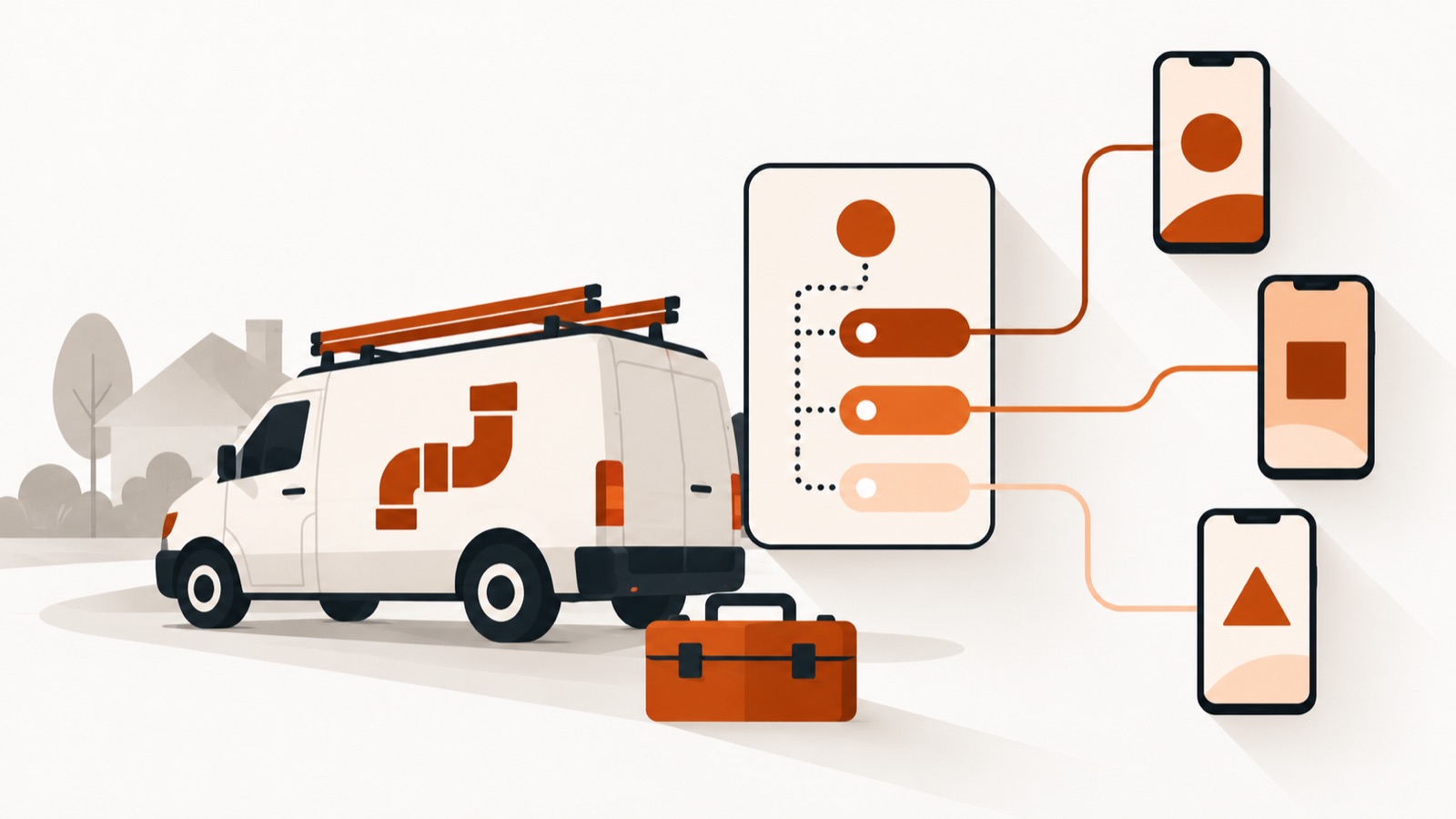
The fictional business
Example Plumbing Co has five people: the owner, two technicians, an office administrator and an apprentice. They work out of vans, so nobody sits at a desk phone. Before the setup, the owner's mobile is on the van and the website, and calls come in during jobs. The technicians share a work mobile that goes with whoever is taking new jobs that day.
The menu
Greeting: "Thanks for calling Example Plumbing. For a new job, press 1. For a job already booked, press 2. For billing, press 3."
| Option | Does | Why |
|---|---|---|
| 1 New job | Rings the shared technicians' work mobile | Whoever has it today takes new jobs; unanswered calls go to voicemail. |
| 2 Booked job | Rings the office administrator's mobile | One person keeps the schedule and knows every booking. |
| 3 Billing | Takes a voicemail | It can wait, and the administrator calls back with the invoice in front of them. |
Three options is deliberate: fewer options get used correctly. Each option rings up to three phones in turn, takes a voicemail or plays a message; phones never ring all at once, which is why new jobs go to one shared work mobile rather than to both technicians at the same moment.
After hours
Hours: Monday to Friday, 8:00 am to 5:00 pm, Eastern. The holidays they add are closed all day.
Outside hours: the closed message, "We are closed. Please leave a message with your name, address and what is wrong, and we will call you back in the morning," then voicemail.
Calls are not forwarded to anyone after hours. A business that has to answer emergencies at night needs an on-call arrangement this service does not provide; missed calls and after hours covers the trade-offs.
Voicemail
A message left on any option is emailed to the office administrator and the owner, with the recording attached and the transcript following in a second email, as shown on what you receive. The administrator reads the transcripts first thing and calls back the urgent ones.
What it costs and what changes
$29 a month for the business, with no per-person charge. Only the owner has a dashboard account; everyone else is just a phone number on a menu option. When the shared mobile changes hands, nothing needs editing, and when a phone number changes, the owner edits the option and publishes the menu. The owner's number comes off the van and the website, and the business number goes on instead.
The same pattern, adapted, appears in the industry guides: a dental practice, a law firm or a property manager would choose different options but make the same four decisions.
Articles on this topic
Topics Auto attendant Call routing Small business phone All topics